This document offers a comprehensive guide for configuring the development environment and debugging the worker component within the AI worker repository.
This project uses uv for Python dependency management. To set up a local development environment:
-
Install uv: Follow the uv installation guide.
-
Install dependencies: Navigate to the
runnerdirectory and install dependencies:cd runner uv sync --extra batch --extra devAvailable dependency extras:
batch- Dependencies for batch inference pipelines (text-to-image, image-to-video, etc.)realtime- Dependencies for realtime pipelines (streamdiffusion, comfyui, etc.)llm- Dependencies for LLM pipelinesdev- Development dependencies (pytest, etc.)
-
Run tests:
uv run pytest
-
Generate OpenAPI spec:
uv run python gen_openapi.py
Ensure Docker and the nvidia-container-toolkit are installed, with Docker correctly configured. Then, either pull the pre-built image from DockerHub or build the image locally in this directory.
docker pull livepeer/ai-runner:latestcd runner
docker build -f docker/Dockerfile -t livepeer/ai-runner:latest .The AI Runner container's runner app uses HuggingFace model IDs to reference models. It expects model checkpoints in a /models directory, which can be mounted to a local models directory. To download model checkpoints to the local models directory, use the dl-checkpoints.sh script:
-
Install Hugging Face CLI: Install the Hugging Face CLI using uv (recommended) or pip:
# Using uv (recommended)
uv tool install huggingface_hub

# Or using pip
pip install huggingface_hub
-
Set up Hugging Face Access Token: Generate a Hugging Face access token as per the official guide and assign it to the
HF_TOKENenvironment variable. This token enables downloading of private models from the Hugging Face model hub. Alternatively, use the Hugging Face CLI's login command to install the token.[!IMPORTANT] The
dl_checkpoints.shscript includes the SVD1.1 model. To use this model on the AI Subnet, visit its page, log in, and accept the terms. -
Download AI Models: Use the dl_checkpoints.sh script to download models from
aiModels.jsonto~/.lpData/models. Run the following command in the.lpDatadirectory:curl -s https://raw.githubusercontent.com/livepeer/ai-worker/main/runner/dl_checkpoints.sh | bash -s -- --beta[!NOTE] The
--betaflag downloads only models supported by the Livepeer.inc Gateway node on the AI Subnet. Remove this flag to download all models.
Tip
If you want to download individual models you can checkout the dl-checkpoints.sh script to see how to download model checkpoints to the local models directory.
Run container:
docker run --name text-to-image -e PIPELINE=text-to-image -e MODEL_ID=<MODEL_ID> --gpus <GPU_IDS> -p 8000:8000 -v ./models:/models livepeer/ai-runner:latest
Query API:
curl -X POST -H "Content-Type: application/json" localhost:8000/text-to-image -d '{"prompt":"a mountain lion"}'Retrieve the image from the response:
curl -O 0.0.0.0:8937/stream/<STREAM_URL>.pngRun container:
docker run --name image-to-image -e PIPELINE=image-to-image -e MODEL_ID=<MODEL_ID> --gpus <GPU_IDS> -p 8000:8000 -v ./models:/models livepeer/ai-runner:latestQuery API:
curl -X POST localhost:8000/image-to-image -F prompt="a mountain lion" -F image=@<IMAGE_FILE>Retrieve the image from the response:
curl -O 0.0.0.0:8937/stream/<STREAM_URL>.pngRun container
docker run --name image-to-video -e PIPELINE=image-to-video -e MODEL_ID=<MODEL_ID> --gpus <GPU_IDS> -p 8000:8000 -v ./models:/models livepeer/ai-runner:latest
Query API:
curl -X POST localhost:8000/image-to-video -F image=@<IMAGE_FILE>Retrieve the image from the response:
curl -O 0.0.0.0:8937/stream/<STREAM_URL>.mp4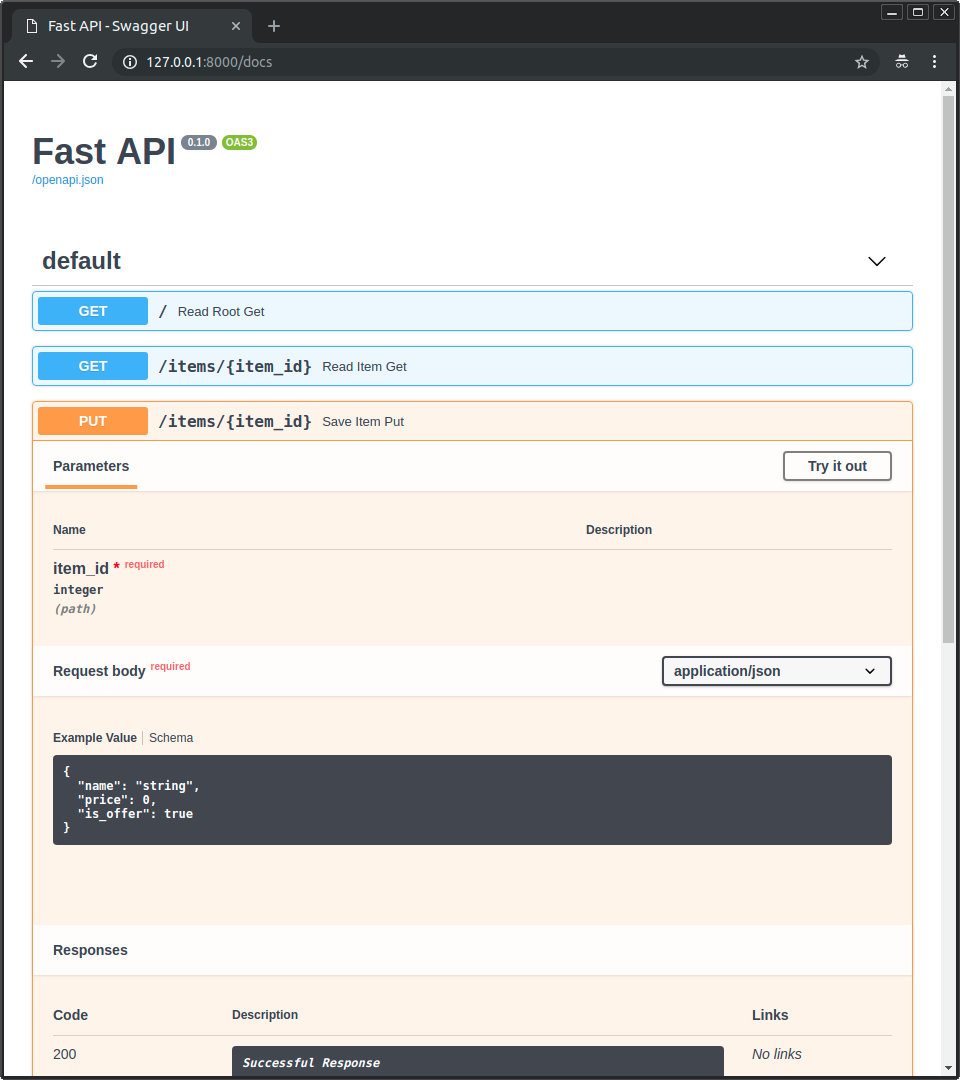
The runner comes with a built-in Swagger UI for testing API endpoints. Visit http://localhost:8000/docs to access it.
The runner contains several optimizations to speed up inference or reduce memory usage:
SFAST: Enables the stable-fast optimization, enhancing inference performance.
docker run --gpus <GPU_IDs> -v ./models:/models livepeer/ai-runner:latest python bench.py --pipeline <PIPELINE> --model_id <MODEL_ID> --runs <RUNS> --batch_size <BATCH_SIZE>Example command:
# Benchmark the text-to-image pipeline with the stabilityai/sd-turbo model over 3 runs using GPU 0
docker run --gpus 0 -v ./models:/models livepeer/ai-runner:latest python bench.py --pipeline text-to-image --model_id stabilityai/sd-turbo --runs 3
Example output:
----AGGREGATE METRICS----


pipeline load time: 1.473s
pipeline load max GPU memory allocated: 2.421GiB
pipeline load max GPU memory reserved: 2.488GiB
avg inference time: 0.482s
avg inference time per output: 0.482s
avg inference max GPU memory allocated: 3.024s
avg inference max GPU memory reserved: 3.623s
For benchmarking script usage information:
docker run livepeer/ai-runner:latest python bench.py -hTo deploy the runner on Modal, a serverless GPU platform, follow these steps:
-
Prepare for Deployment: Use the
modal_app.pyfile for deployment. Before you start, perform a dry-run in a dev environment to ensure everything is set up correctly. -
Create Secrets: In the Modal dashboard, create an
api-auth-tokensecret and assign theAUTH_TOKENvariable to it. This secret is necessary for authentication. If you're using gated HuggingFace models, create ahuggingfacesecret and set theHF_TOKENvariable to your HuggingFace access token. -
Create a Volume: Run
modal volume create modelsto create a network volume. This volume will store the weights of your models. -
Download Models: For each model ID referenced in
modal_app.py, runmodal run modal_app.py::download_model --model-id <MODEL_ID>to download the model. -
Deploy the Apps: Finally, deploy the apps with
modal deploy modal_app.py. After deployment, the web endpoints of your apps will be visible in your Modal dashboard.
To debug the ai-runner as used from the AI worker logic in go-livepeer, use the go scripts in the cmd/examples folder to test and debug the AI worker. Run these scripts with Golang or use Vscode with the golang extension for debugging. Future updates will include tests to enhance the development pipeline.
To run the AI worker examples with a custom go-livepeer version, replace the go module reference in the examples/go.mod file with the path to your local go-livepeer repository:
go mod edit -replace github.com/livepeer/go-livepeer=../path/to/go-livepeerThis setup allows you to debug the AI worker package in go-livepeer when making changes to the ai-runner software.