Getting Started Npm: Npm install Server: npm run start:dev (Run in development mode) npm run start (Run in production mode)
Usage: The get route for /products will return all products of a page (default page one, count 5). Will return a specific product with a product_id parameter included. The get route for /products/styles will return the styles of a specific product. product_id must be passed as a query parameter. The get route for /products/related will return a list of product ids of related products. product_id must be passed as a query parameter.
Products-API: The overview of this project was to expand the backend of our previous Project Catwalk to support a greater number of virtual visitors. We need to implement a back-end that can scale to meet the demands of frequent visitor traffic and send the data formatted, the way Project Catwalk frontend was designed to receive it.
Overview: I used a postgres database to store the data uploaded from csv files. I utilized docker to create an image of my back-end server and upload it to docker hub, and deploy it on my AWS ec2 instance by pulling from docker hub. I used k6 to stress test my server locally, and used loader.io to stress test the server when deployed to ec2 instance. I implemented load balancing by incorporating Nginx to use round-robin to send requests to different ec2 instances.
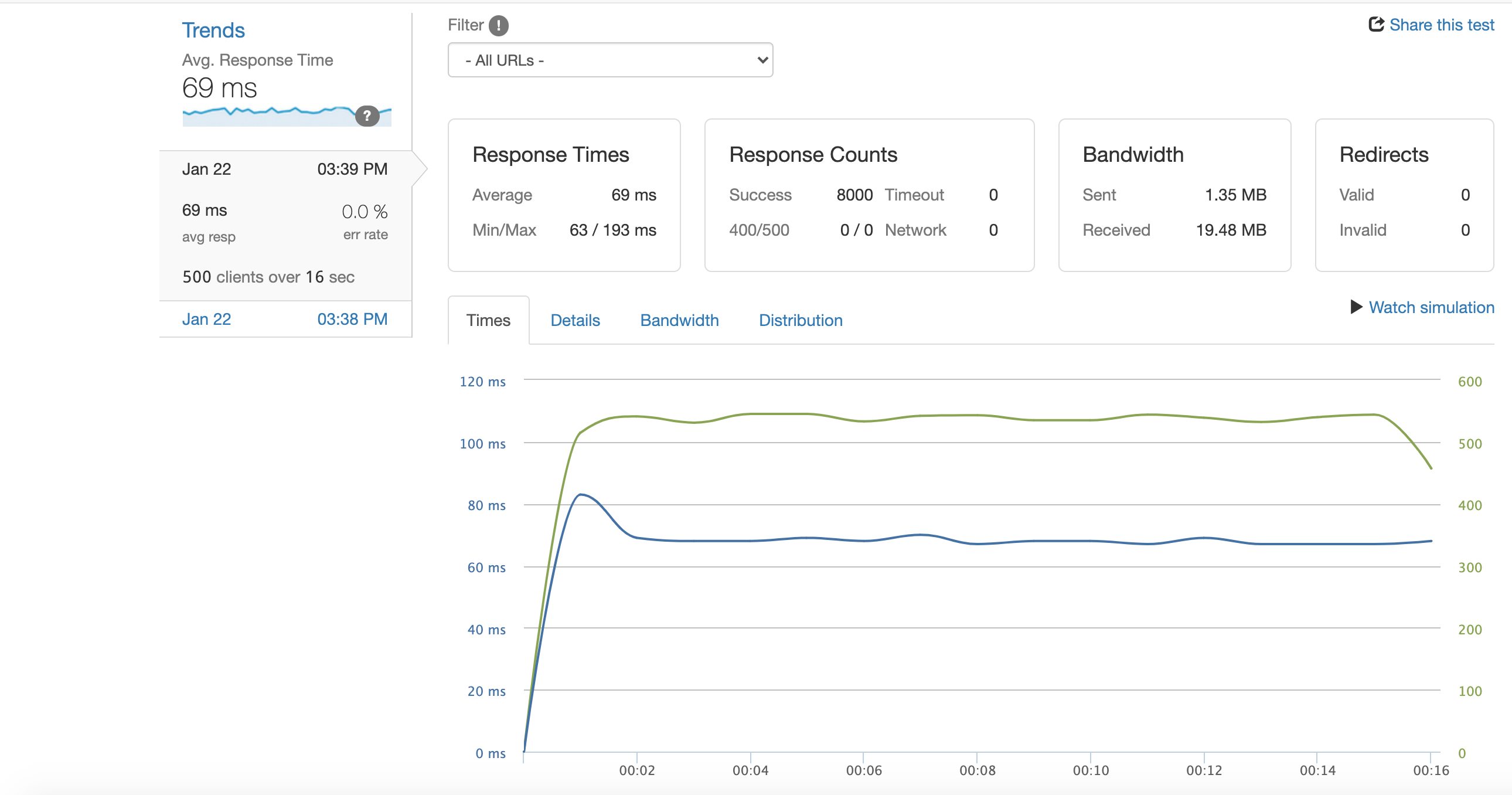
Currently with two ec2 server instances running, my site is able to handle 500 Vus over 15 seconds very well with an average response time of 69ms.
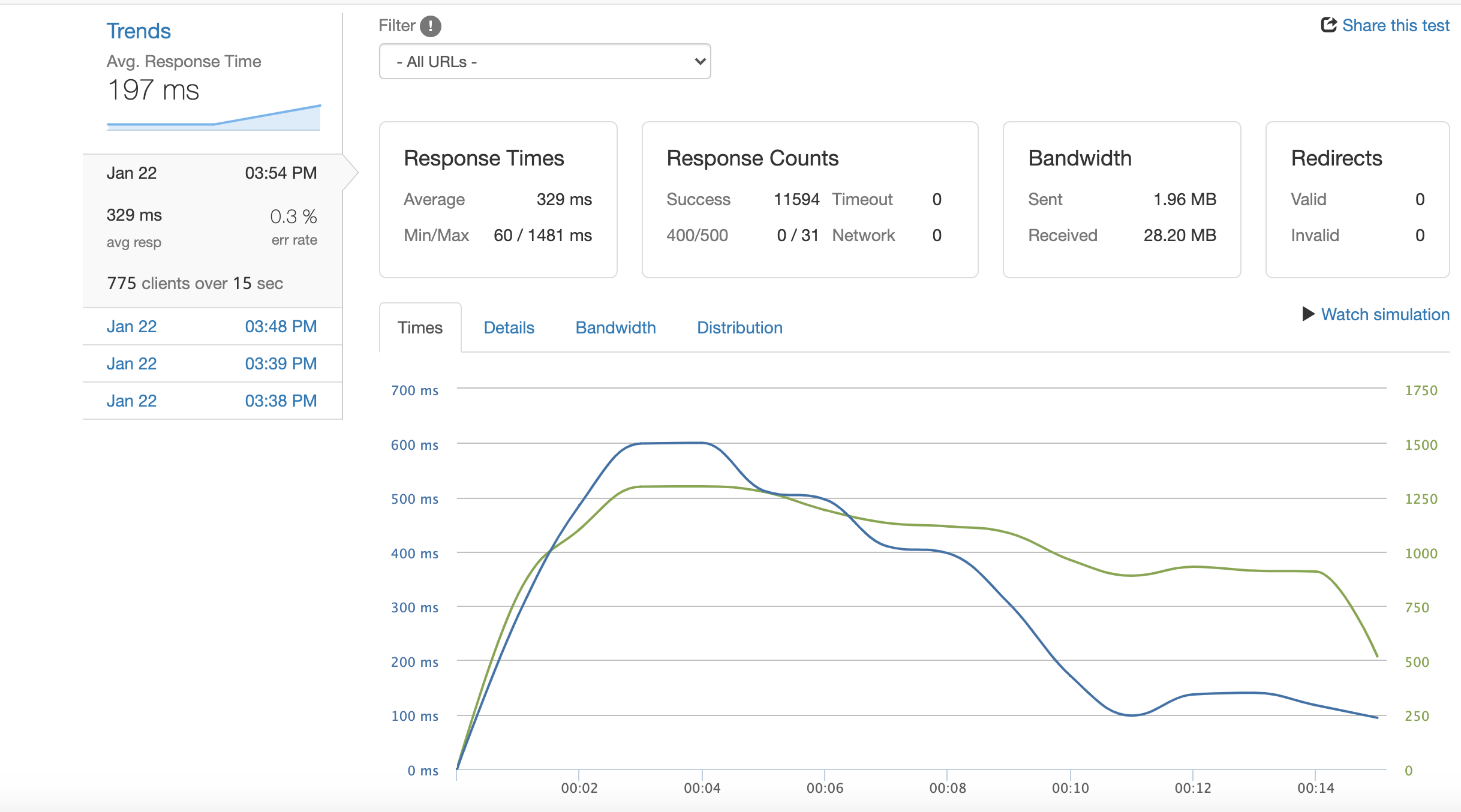
At around 775 Vus over 15seconds is when my two servers start to slow down the average response time. I would need to add more servers or scale the servers vertically to accomodate more virtual users.
Acknowledgments: Postgres K6 NewRelic Nginx Loader.io Docker